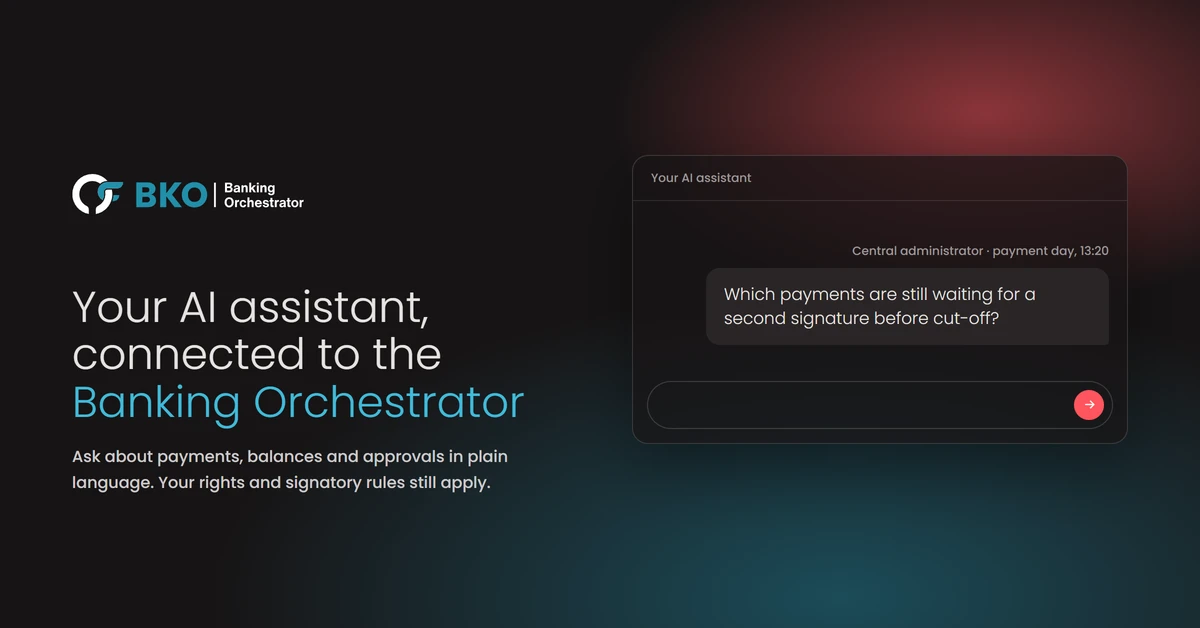
At the ATEL Tech Day on 24 November, Finologee showed a treasury morning with an AI assistant connected to its Banking Orchestrator (FinologeeBKO). The assistant consolidated the group's cash, checked every line against the treasury policy, found the account that would run short and prepared the payment to cover it. The decisions and the signatures stayed with people.
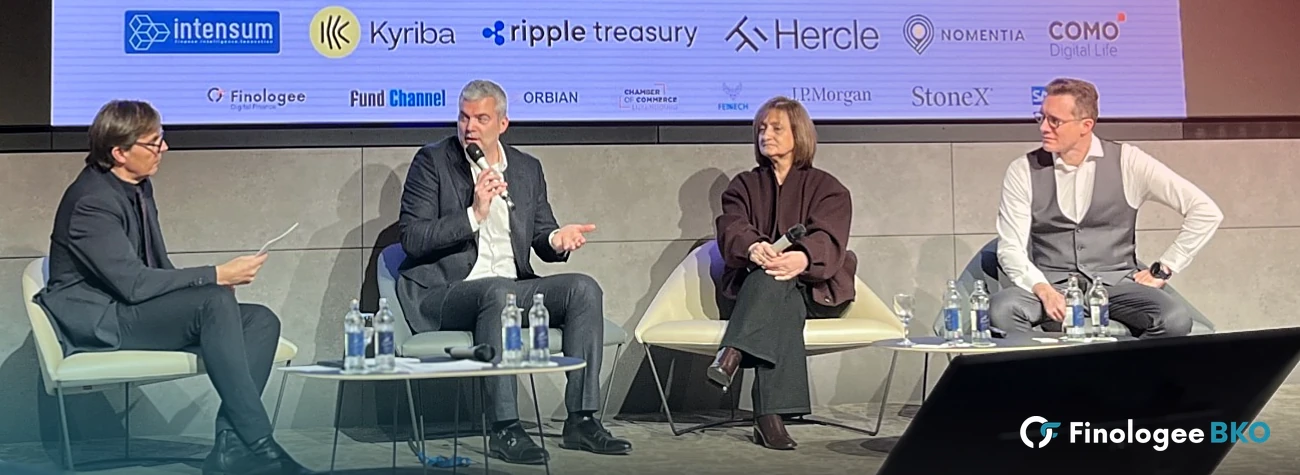
Jonathan Prince, co-founder and CSO of Finologee, presented the demo on stage with one message: it is about efficiency and about the treasurer's margin. It was part of the panel "Forecasts Your CFO Trusts: Turning Treasury Data into Decisions" at the ATEL Tech Day. François Masquelier, chairman of ATEL, moderated. Jonathan shared the stage with two corporate treasurers: Jean-Philippe Bernard, Group Head of Treasury at The Vita Group, and Maria Priolo, Director and Assistant Treasurer at QuidelOrtho.
The questions every treasurer starts the day with
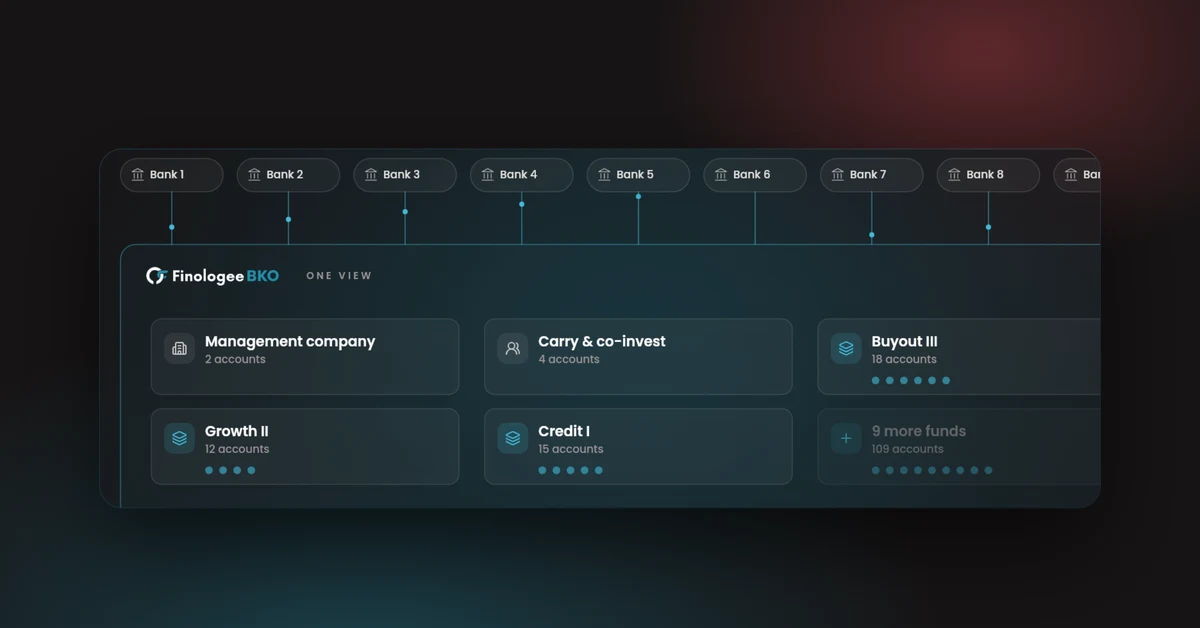
The first questions of a treasury day are the same everywhere: where the cash stands, whether it is within policy, which account runs short this week. The answers depend on data that sits at several banks. FinologeeBKO brings the accounts and payments of the group together in one place, above the existing bank relationships, and the assistant in the demo works on top of that with the rights of the person who connected it.
From the policy check to the signature queue
The assistant in the video is Claude, from Anthropic. It is connected to FinologeeBKO, where the group's bank accounts and payments sit, and it has been given the group's treasury policy. A dashboard beside it fills in as each answer arrives. Four questions take the treasurer from the policy check to the signature queue.
- 01Cash against policyThe treasurer asks for this morning's cash position and whether the group is within its policy. The assistant reads the balances in FinologeeBKO and checks them against the policy limits. It reports five breaches under four rules, among them BNY Mellon holding 38.2% of group cash against a limit of 25%. It turns them into four decisions for the treasury committee: reduce BNY Mellon, approve or reduce the CHF position, close or approve the US Bank account and review the two JPY accounts. The committee takes them.
See how it looks
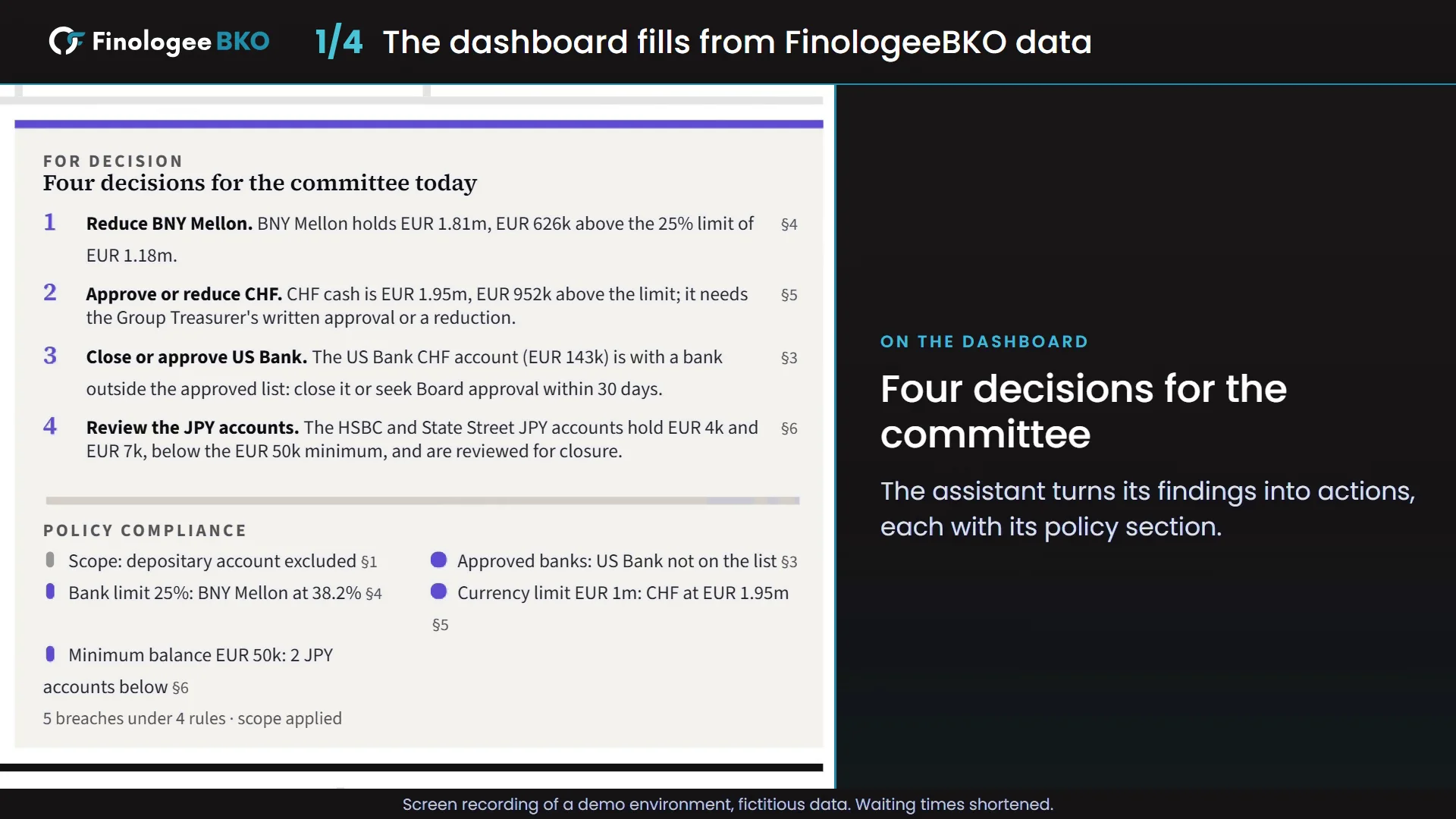
Five breaches become four decisions for the committee. Fictitious demo data. - 02Payments due this weekThe treasurer asks which payments leave the accounts over the next five business days and whether any account runs short. The screen shows group cash of EUR 4.73 million across 2 entities and 10 accounts, and EUR 801k due in five business days across 15 payments. Goldman Sachs EUR would fall to EUR -318k on Wednesday 18.11, below its minimum balance of EUR 50k, because one payment of EUR 750,000 takes the account below zero. BIL EUR, the only other account with payments due, stays above EUR 288k.
See how it looks
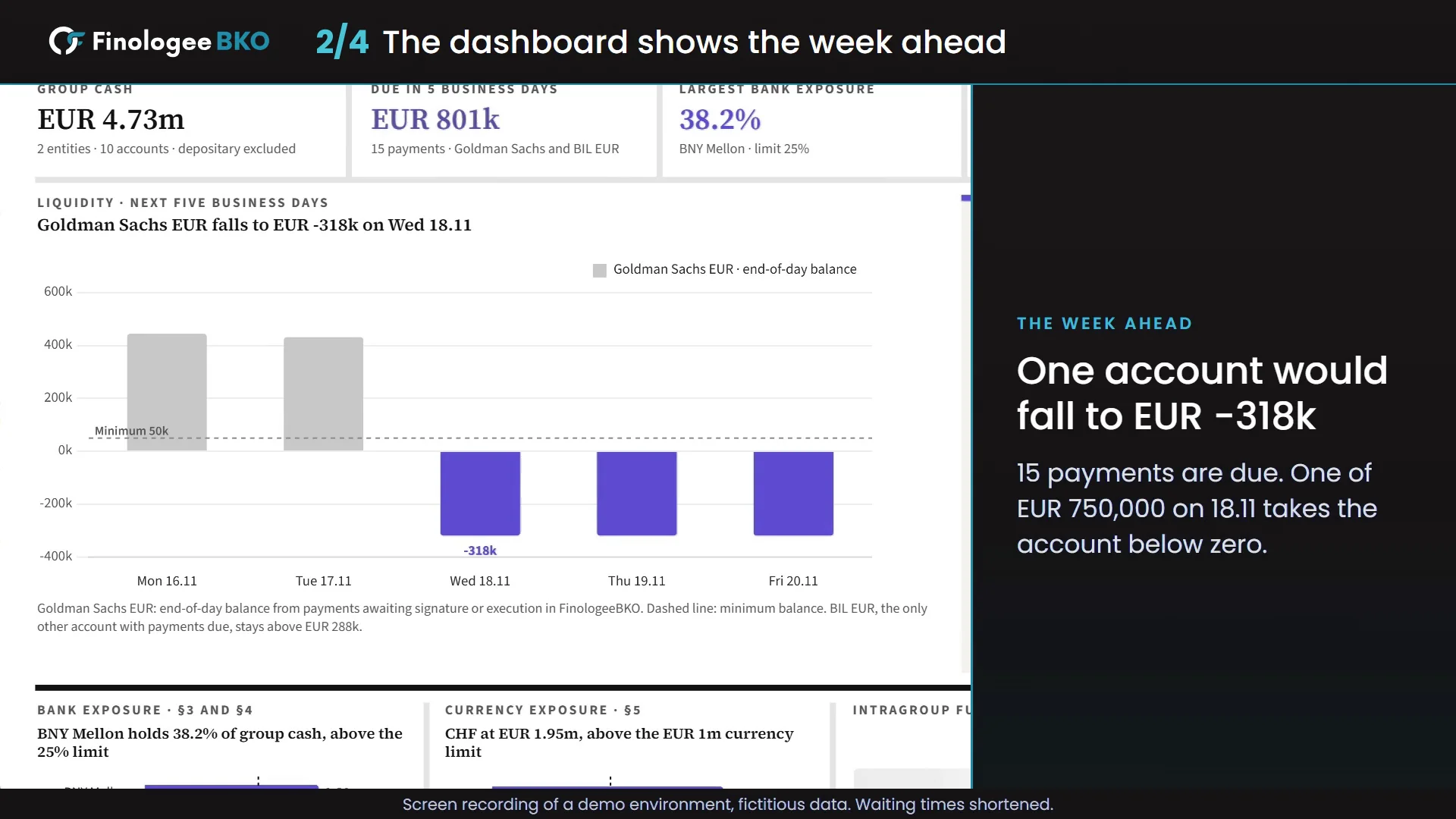
Goldman Sachs EUR falls below zero on Wednesday. Fictitious demo data. - 03The shortfallAsked to fix it in line with the policy, the assistant prepares an intragroup credit transfer of EUR 400,000 from BCEE EUR to the Goldman Sachs EUR account of Company S.A. The screen shows the payment in FinologeeBKO, created under the user's own name, with the status waiting for signatures and 0 of 5 signatures collected. The payment goes to the bank only once the signatory rules are met.
See how it looks
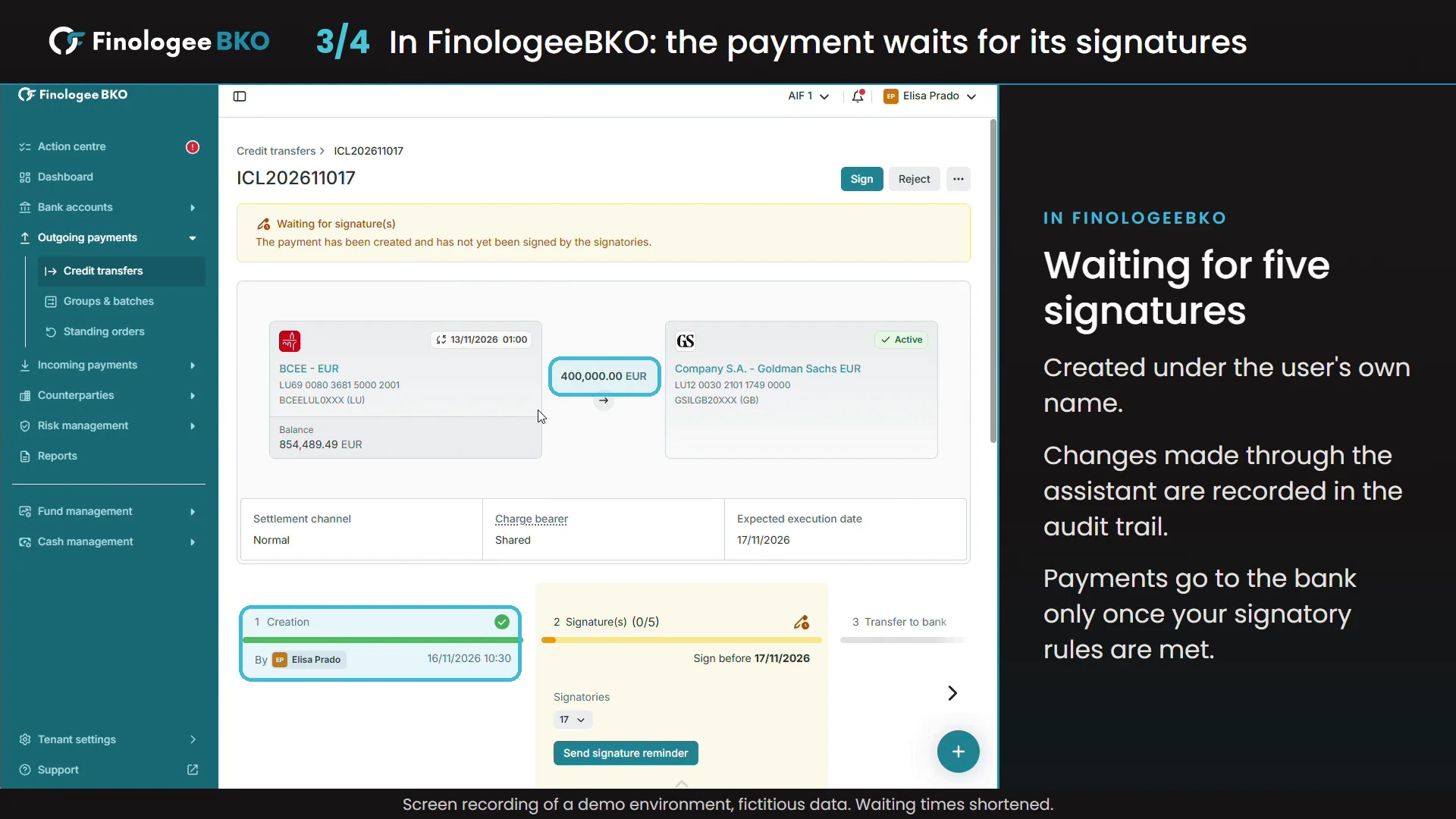
The payment waits for its five signatures in FinologeeBKO. Fictitious demo data. - 04The surplusLast, the treasurer asks how much cash could go into money market funds after this week's payments and what it would earn in a month. The assistant writes a one-page proposal for the Group Treasurer to approve. It places EUR 2.80 million of surplus cash in same-currency government money market funds with same-day liquidity, earning EUR 2,914.57 over 30 days. That is EUR 4.73 million of group cash, less EUR 0.80 million of payments due and EUR 1.14 million of buffers. The proposal also brings BNY Mellon from 38.2% to 3.2% of group cash, within the limit of 25%.
See how it looks
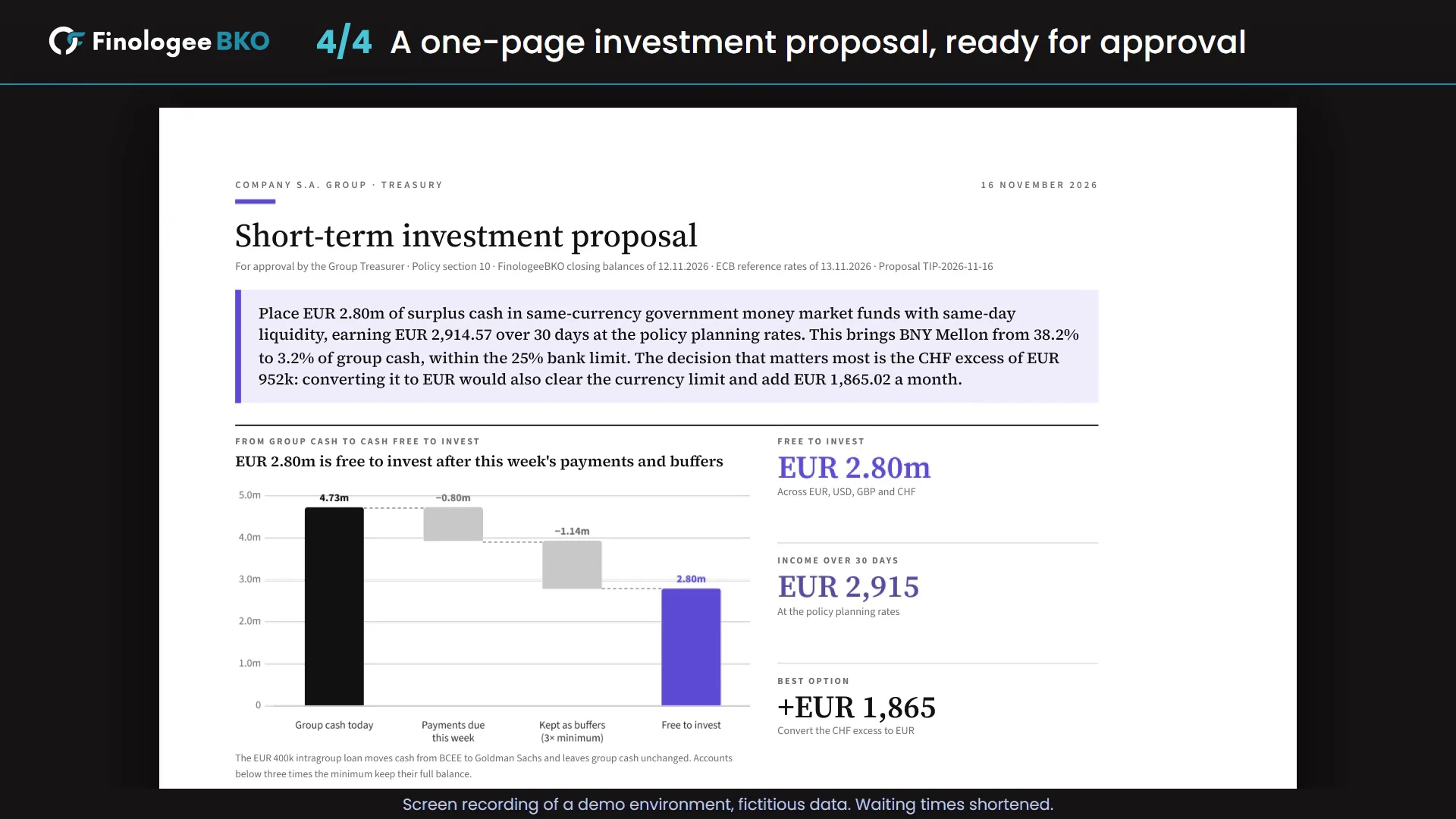
The one-page proposal for the Group Treasurer. Fictitious demo data.
See the demo online
Jonathan's demo, as shown on stage, plays here after a short registration. The recording has no sound: Jonathan commented it live.
More efficiency while keeping control

“The assistant takes the routine, the treasurer keeps the decision. That is where efficiency and margin come from.”
Jonathan PrinceCo-founder and CSO, Finologee
What moves to the assistant
The demo shows four places where the routine moves from the treasurer to the assistant. The balances of every bank are read in one place instead of bank by bank. The policy check runs across every account and limit, so five breaches under four rules arrive as four decisions rather than as a spreadsheet to build. The shortfall is found before Wednesday, together with the payment that causes it, and the covering transfer is prepared in FinologeeBKO instead of keyed in by hand. The proposal for the surplus comes with the arithmetic behind it: EUR 4.73 million of cash, less EUR 0.80 million of payments due and EUR 1.14 million of buffers. All figures come from a fictitious demo environment and illustrate the mechanism. They are not a promised return.
What stays with the treasurer
The treasury committee takes the four decisions that come out of the policy check, the Group Treasurer approves the investment proposal and the signatories release the payment once the signatory rules are met. The assistant has no signing function. It works within the rights of the user who connected it: if that user can only read, so can the assistant. The payment in the demo was created under the user's own name, and every change made through the assistant is recorded in the audit trail under that name.
FinologeeBKO sits above the group's existing bank relationships. It does not replace the banks, the ERP or the TMS platform.
More use cases for treasury teams
The demo covers one morning. A treasury team's week has other moments where AI can prepare the work and people decide: the queue of payments waiting for signature, and the cash that sits idle above the buffers. All names and figures are fictitious.
The signature queue. Forty-six payments wait for signature across four accounts and three currencies. The question is whether the cash is there.
Idle cash. The CFO asks how much surplus cash the group held above its buffers last quarter, across 12 EUR accounts and 5 banks.
See it on a treasury's own policy
Claude is one of four assistants that work with FinologeeBKO. ChatGPT, Mistral Vibe and Copilot Studio from Microsoft connect the same way, always under the user's own rights and approvals. The article on the connection explains how it works, and more use cases, the set-up and the data questions are collected in one place.
A treasury morning still starts with the same question about cash and policy. What changes is who prepares the answer, while the decision stays with the signatories. Treasurers, finance leaders and CFOs who want to see it applied to their own banks, accounts and policy can read about FinologeeBKO for corporates or book a demo.